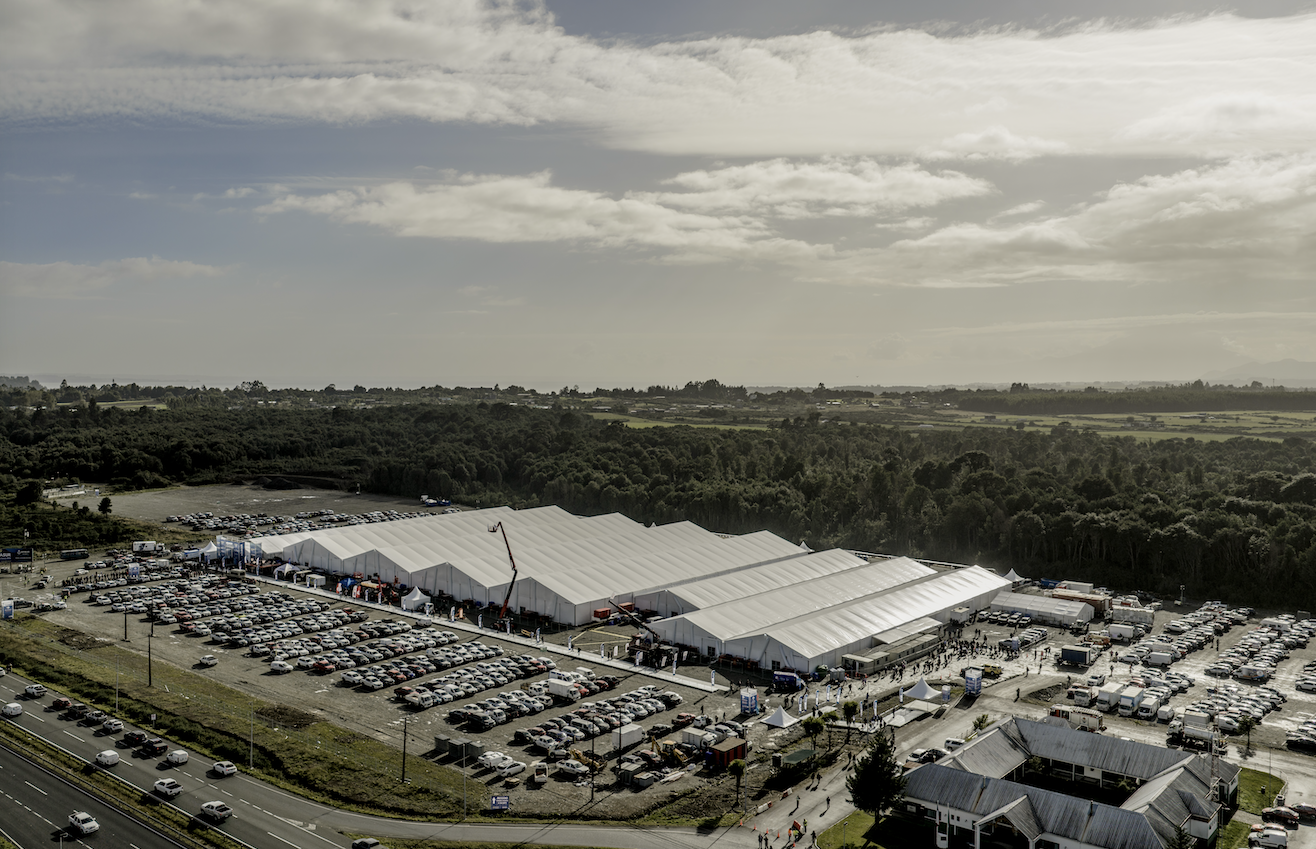
Don't miss the opportunity to participate in the largest aquaculture event in the Southern Hemisphere!
Don't miss the opportunity to participate in the largest aquaculture event in the Southern Hemisphere!

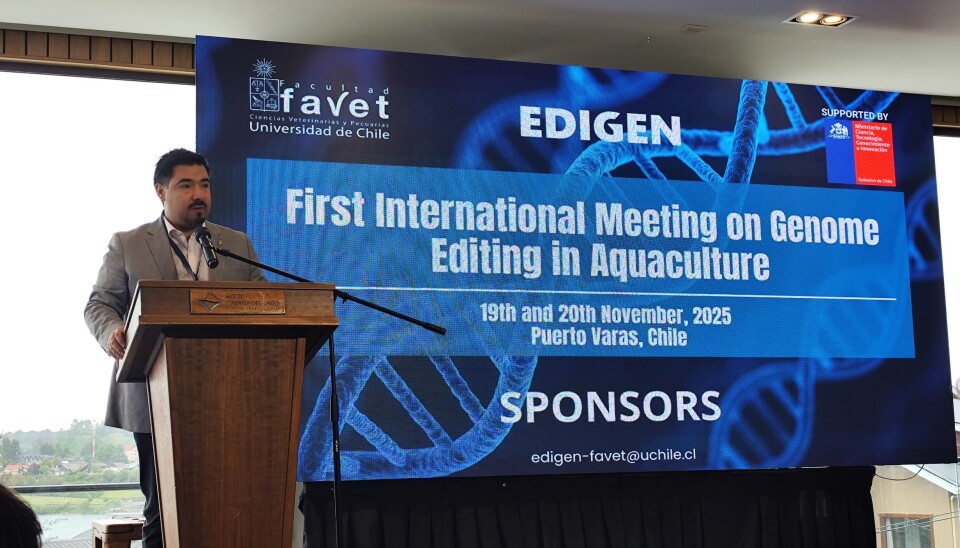

The high-level meeting will bring together global leaders from the salmon farming industry, genetics companies, and academia to analyze the present and future of gene editing applied to aquaculture species.
EDIGEN, a public-private initiative led by the Faculty of Veterinary and Animal Sciences at the University of Chile, seeks to promote an informed, responsible, and strategic approach to the use of gene editing technologies in aquaculture, considering both their enormous productive and health potential and the regulatory, ethical, and social acceptance challenges that these tools entail.
In a global context marked by the need to move towards more sustainable, resilient, and efficient production systems, gene editing is emerging as one of the most disruptive and promising technologies in the sector. Thus, at the Aquasur 2026 International Congress, the international workshop “EDIGEN: Perspectives on the Application of Gene Editing in the Global Aquaculture Industry” will be held.
The workshop will feature representatives from scientific institutions and leading global companies. Academic institutions will present their vision of cutting-edge public research on aquatic organisms, while global companies such as Benchmark Genetics, Hendrix Genetics, and Mowi will share their experiences and lessons learned from world-class genetic improvement programs. At the local level, AquaChile will contribute the productive perspective and specific challenges of technological implementation in the regional industry.
The academic world will be represented by the University of Chile, reinforcing the role of public universities in generating knowledge, training advanced human capital, and coordinating science, industry, and public policy. The University of San Sebastián will moderate the workshop, ensuring a dynamic, pluralistic discussion oriented toward constructive dialogue.
The workshop will address key topics such as recent advances in gene editing for disease resistance, animal welfare, and production efficiency; lessons learned from international experiences; emerging regulatory frameworks in different countries; and the conditions necessary for the responsible adoption of these technologies in aquaculture.
More than a technical discussion, the meeting seeks to open a space for strategic reflection on how gene editing can be safely and transparently integrated into the global aquaculture value chain.
This activity will enhance the role of Aquasur 2026 as a platform for convergence for the major debates that will define the future of aquaculture, while cementing Chile’s position as a relevant player in the international discussion on genetic innovation, sustainability, and competitiveness in the sector.