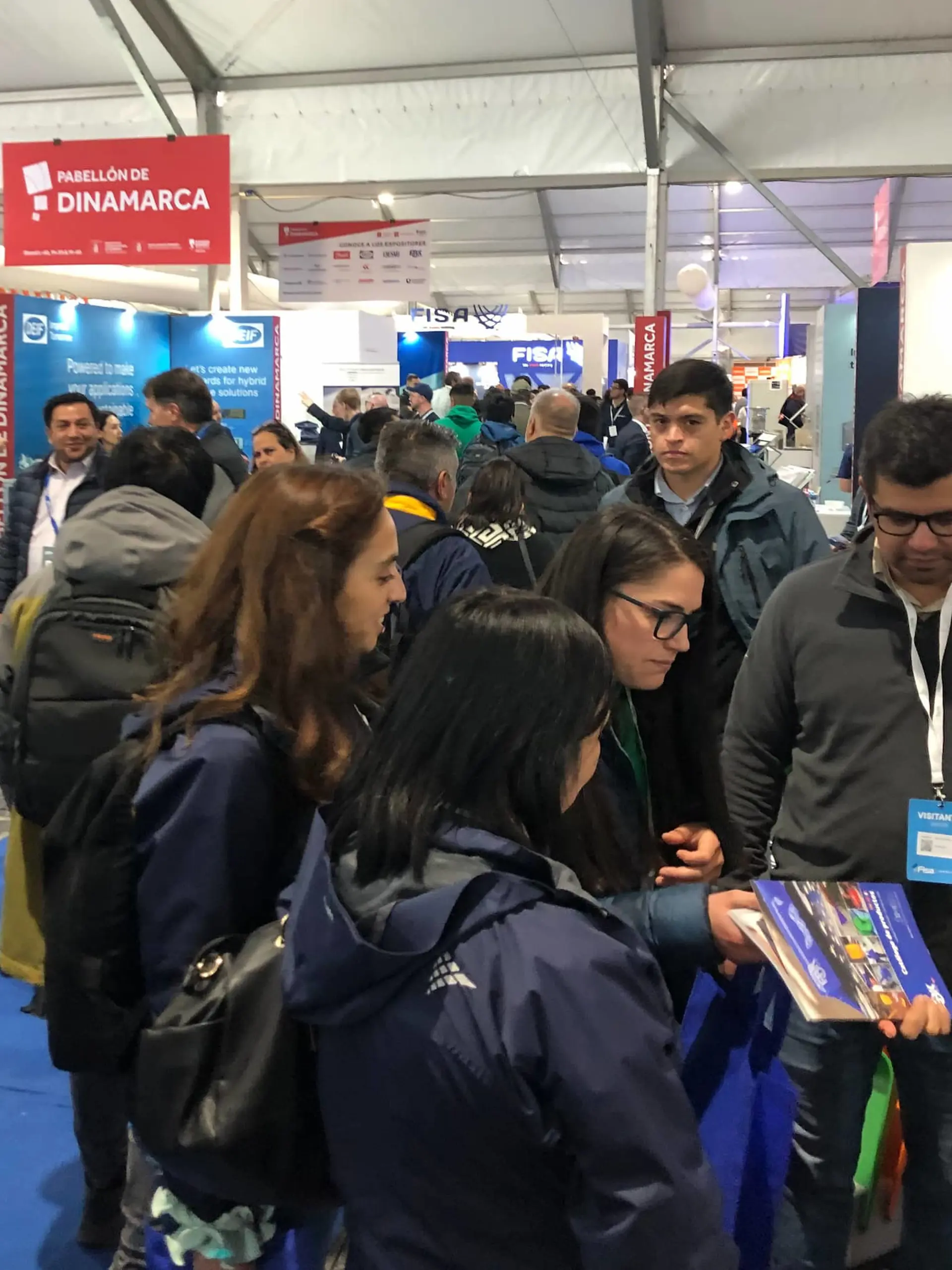
Don't miss the opportunity to participate in the largest aquaculture event in the Southern Hemisphere!
Don't miss the opportunity to participate in the largest aquaculture event in the Southern Hemisphere!
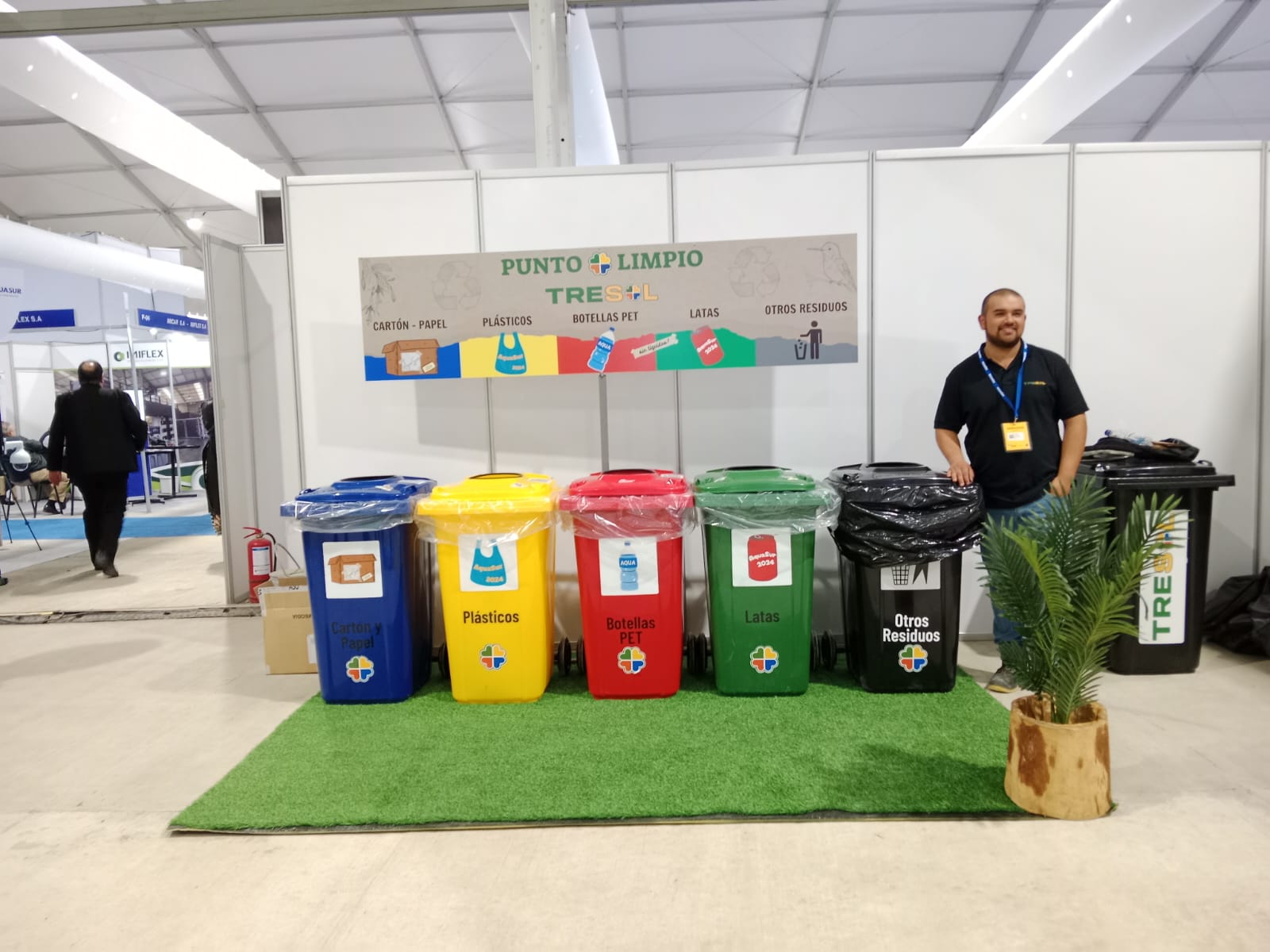

With the technical support of Tresol and a total traceability system, the most important aquaculture fair in the southern hemisphere is committed to transforming its operational management into a model of sustainability and minimal environmental footprint.
With just a couple of weeks to go before the start of Aquasur 2026, which expects to draw more than 20,000 visitors to its 20,000 m² venue between March 24 and 26, the organizers have launched a comprehensive logistical operation aimed at transforming waste management during the event by applying large-scale circular economy standards. Through a waste segregation system at the source and constant monitoring, the fair seeks to ensure that environmental management is a central component of its operations in the Los Lagos Region.
This strategy relies on deploying trained monitors on-site, whose mission will be to advise attendees and maximize material separation with the goal of recycling between 50% and 60% of the total waste produced during the event.
Logistical Capacity and Technical Support
To guarantee the achievement of these goals, Aquasur has the operational support of Tresol, a local company that currently manages approximately 4,742 tons of waste per month in southern Chile. Of this volume, 74.4% corresponds to recyclable waste, demonstrating its capacity to absorb the demand of a fair of this magnitude.
This operation is supported by a recently authorized Collection Center with a capacity of 768 tons per month, allowing for the separate management of recyclable and non-recyclable waste with full traceability to its final destination.
Institutional Commitment and Reporting
On-site management will be under the technical supervision of Sebastián Torres, Environmental Engineer from the University of Los Lagos and Head of Environment at Tresol, along with Carolina Vargas, Commercial Sub-Manager. At the end of the event, a complete and detailed environmental report will be issued to measure the actual impact of the operation.
Regarding this implementation, Carola Fuentes, General Manager of FISA, emphasizes the importance of this action for the operation of Aquasur 2026: “For FISA, environmental management is not only an ethical commitment, but a fundamental pillar of our operational management. We understand that events of the magnitude of Aquasur must be consistent with the sustainability challenges facing the aquaculture industry. Therefore, working with a local partner allows us to ensure real and professional traceability, guaranteeing that the event is a space where productive innovation and ecological responsibility advance hand in hand,” she stated.
Projection and Circular Economy
With this approach, Aquasur 2026 seeks to minimize the environmental impact of waste, optimizing each process so that its generation does not affect the excellence of the event. The goal is to consolidate a model with a minimal environmental footprint, where the logistical infrastructure and industrial valorization allow the fair to operate cleanly, efficiently, and fully integrated with the principles of the circular economy in the Los Lagos Region.
“Today, the region needs real solutions for its waste, and Aquasur is a concrete opportunity to demonstrate that it is possible to transform it into resources,” concludes Carolina Vargas, Commercial Deputy Manager of Tresol.